Patching Drywall So It Actually Disappears
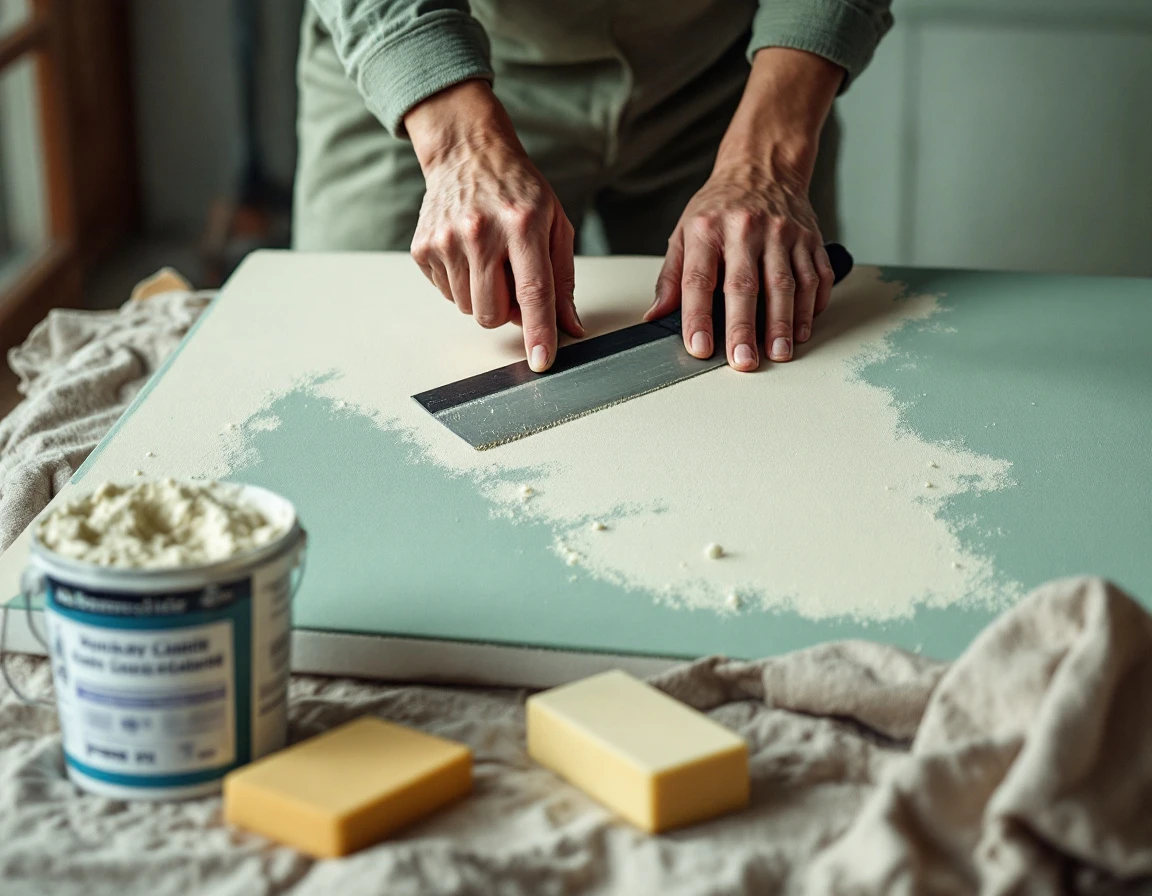
Small holes are genuinely easy. What's hard — and what gives patches away — is making the repair disappear into the wall around it. That part is about technique, not the size of the hole.
Match the patch to the hole. A nail hole just needs a dab of spackle and a light sand. A hole up to about 2 inches (doorknob size) is a good fit for a self-adhesive mesh patch or a press-in plastic patch. Anything larger needs a cut-in piece of drywall, screwed to a backing strip or furring piece behind the hole, which is where the job starts asking for real skill.
Where patches go wrong
- One coat of mud. A single thick coat shrinks and cracks as it dries. Three thin coats, each wider than the last and each fully dry before the next, is what actually holds and feathers smooth.
- Not feathering the edges. The mud needs to taper out 6–8 inches past the patch itself so there's no visible ridge. A patch that's "just the hole plus a little" always shows as a hard-edged bump.
- Skipping primer. Unprimed mud absorbs paint differently than the surrounding wall, so even a perfect patch can "flash" — show up as a slightly different sheen once painted.
- Wrong texture match. Orange peel, knockdown, and smooth walls all need a different approach to blend in. Rolling flat mud onto a textured wall is one of the most common reasons a patch is visible from across the room.
The order that works. Cut and set the patch → tape if there's a seam → first coat, wide → sand → second coat, wider → sand → third coat, feathered out → sand → prime the patch → texture to match → paint the full wall section, not just the patch, so sheen stays even.
Where someone experienced earns their keep. Anyone can mud a patch. Feathering it thin enough to vanish and matching a texture you can't quite name is a feel you build by doing it a lot — the exact kind of thing that's worth having someone show you once, on your actual wall, instead of guessing from a video.
Want someone who knows standing next to you?
Find a Guide for your patch →The Field Guide is written by AlongSide.Guide. AlongSide connects you with Guides who get paid to work alongside you, and some links on this page go to it.